Micro-dosing MDMA with trauma reminders specifically attenuates conditioned fear and hyperarousal
Yarden Viktor Dejorno, Hagit Cohen
Faculty of Health Sciences, Ben-Gurion University of the Negev · Beer-Sheva Mental Health Center, Israel
MDMA-assisted psychotherapy works, but it leans on full psychoactive doses. We asked whether
sub-perceptual micro-doses could do the job in a predator scent stress rat model of PTSD —
and found that they can, but only when each dose is timed to coincide with a trauma reminder.
Timing, not dose frequency, carried the effect.
Time spent freezing at the first trauma reminder, one week after the stressor
F(1,36) = 12.5 · p = 0.0015
Timing dependence
p = 0.003
Same dose, same frequency — given 24 h away from the reminder, the benefit disappeared
paired vs unpaired MDMA
Hyperarousal
768vs930
Mean acoustic startle amplitude (a.u.) after treatment
p = 0.035
Neuroplasticity
+47%
BDNF-expressing cells in the dorsal raphe nucleus (1050 vs 714)
F(1,6) = 6.96 · p = 0.0062
The question
Can a dose you cannot feel still reshape a fear memory?
PTSD affects roughly 6–9% of the general population and considerably more among
soldiers and first responders. First-line treatments — trauma-focused psychotherapy and SSRIs —
leave many patients with residual symptoms, and dropout is high.
MDMA-assisted psychotherapy has produced large, durable reductions in PTSD severity in
phase 3 trials, but every protocol relies on full psychoactive doses, which carry acute
risks and neurotoxicity concerns. That raises an obvious question that almost no one had
tested empirically: is the psychedelic experience the active ingredient, or is it the
pharmacological state during memory reactivation?
We tested the second possibility directly — a continuous regimen of
200 µg/kg MDMA, well below the psychoactive range, given after
trauma and deliberately synchronised (or not) with reactivation of the traumatic memory.
The design
Six groups, one variable that mattered
78 adult male Sprague-Dawley rats (final N = 76) underwent
predator scent stress — 20 minutes of exposure to soiled cat litter, a well-validated
rodent PTSD model. Treatment ran for three weeks; behavioural testing continued for a week
after the last injection, and brains were collected for immunohistochemistry and
Golgi-Cox morphology.
No stressor. Controls for drug effects in the absence of trauma.
Group 3 · n = 18
PSS + saline
Stressed, vehicle-treated, weekly trauma reminders. The comparison group.
Key
Group 4 · n = 20
PSS + MDMA, paired
Reminder presented 30 min after injection — inside the drug's acute window.
Group 5 · n = 18
PSS + MDMA, unpaired
Identical dose and frequency, but reminders 24 h away from any injection.
Group 6 · n = 6
PSS + MDMA, weekly
Paired reminders, but one injection per week instead of three.
Results
Fear and arousal moved. General anxiety did not.
01
Micro-dosing kept fear from escalating
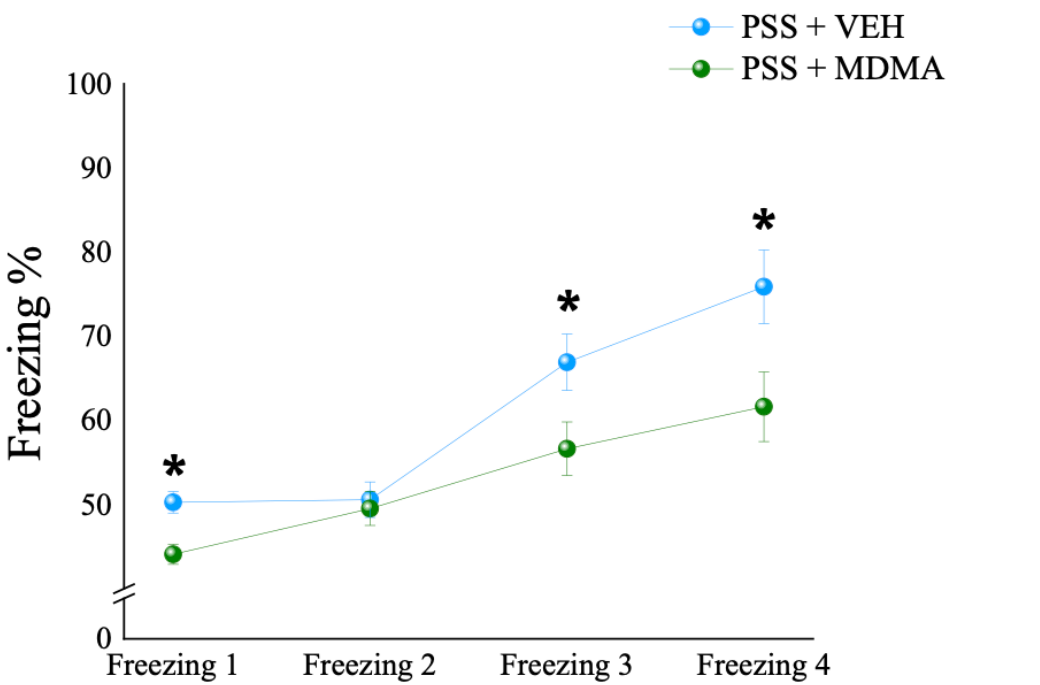
In vehicle-treated rats, every weekly re-exposure to the trauma context made things worse:
freezing climbed steeply across sessions (F(3,108) = 42.11, p < 0.0001).
Each reminder was reinforcing the fear rather than extinguishing it.
MDMA-treated rats started lower and stayed flatter — the treatment × session
interaction was significant (F(3,108) = 3.30, p = 0.023).
The separation was still there at the fourth reminder, a week after the last dose,
with no drug on board.
Freezing across four weekly trauma reminders. Vehicle (blue) versus paired MDMA (green); ✱ marks p < 0.05. Reminder 4 took place one week after treatment ended.
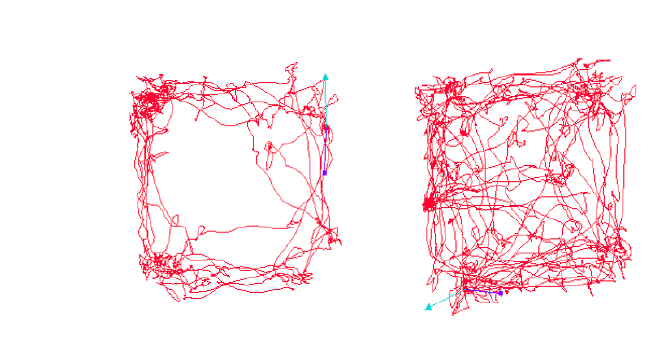
Representative movement traces during the 10-minute context test — vehicle (left) versus MDMA (right). Less freezing, more exploration, with no change in baseline locomotion in unstressed animals.
02
The drug only worked when the memory was open
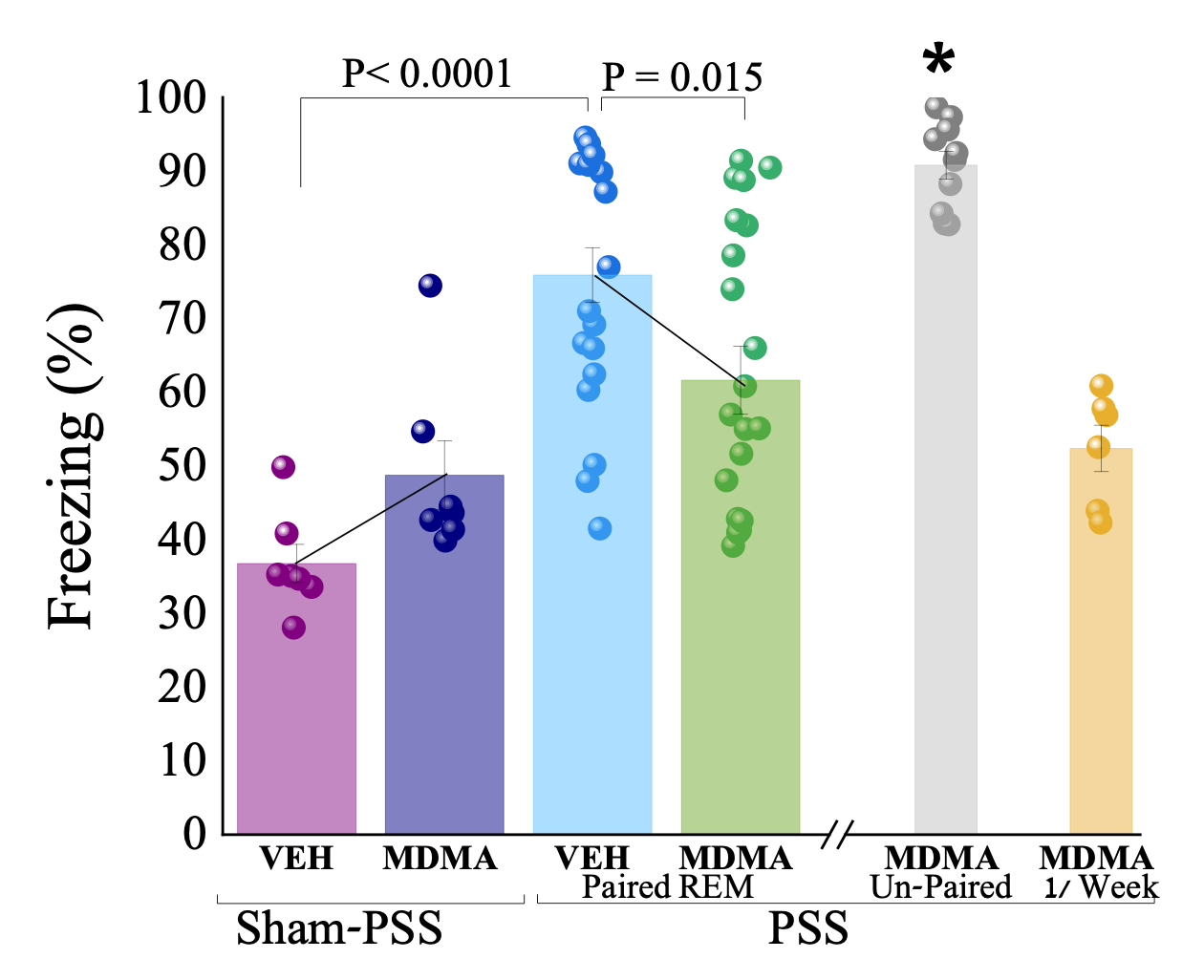
This is the finding the whole design was built to isolate. In the final context test —
run with no injection at all — predator stress raised freezing sharply over sham controls
(p < 0.0001), and MDMA paired with a reminder brought it back down
(p = 0.015).
Take the same dose at the same frequency and move it 24 hours away from the reminder, and
the benefit vanishes (paired vs unpaired, p = 0.003). Drop from three
doses a week to one, but keep it paired, and nothing changes. There was also no main effect
of MDMA on its own (F(1,48) = 0.05, p = 0.829) — only a
PSS × treatment interaction (F(1,48) = 6.24, p = 0.016).
The drug does nothing to a fear memory that isn't currently active.
Final contextual freezing, all six groups, no drug on board. Each point is one animal. Pairing MDMA with reminders (green) reduced freezing relative to vehicle; the same regimen delivered away from reminders (grey) did not.
03
Arousal came down; baseline anxiety was untouched
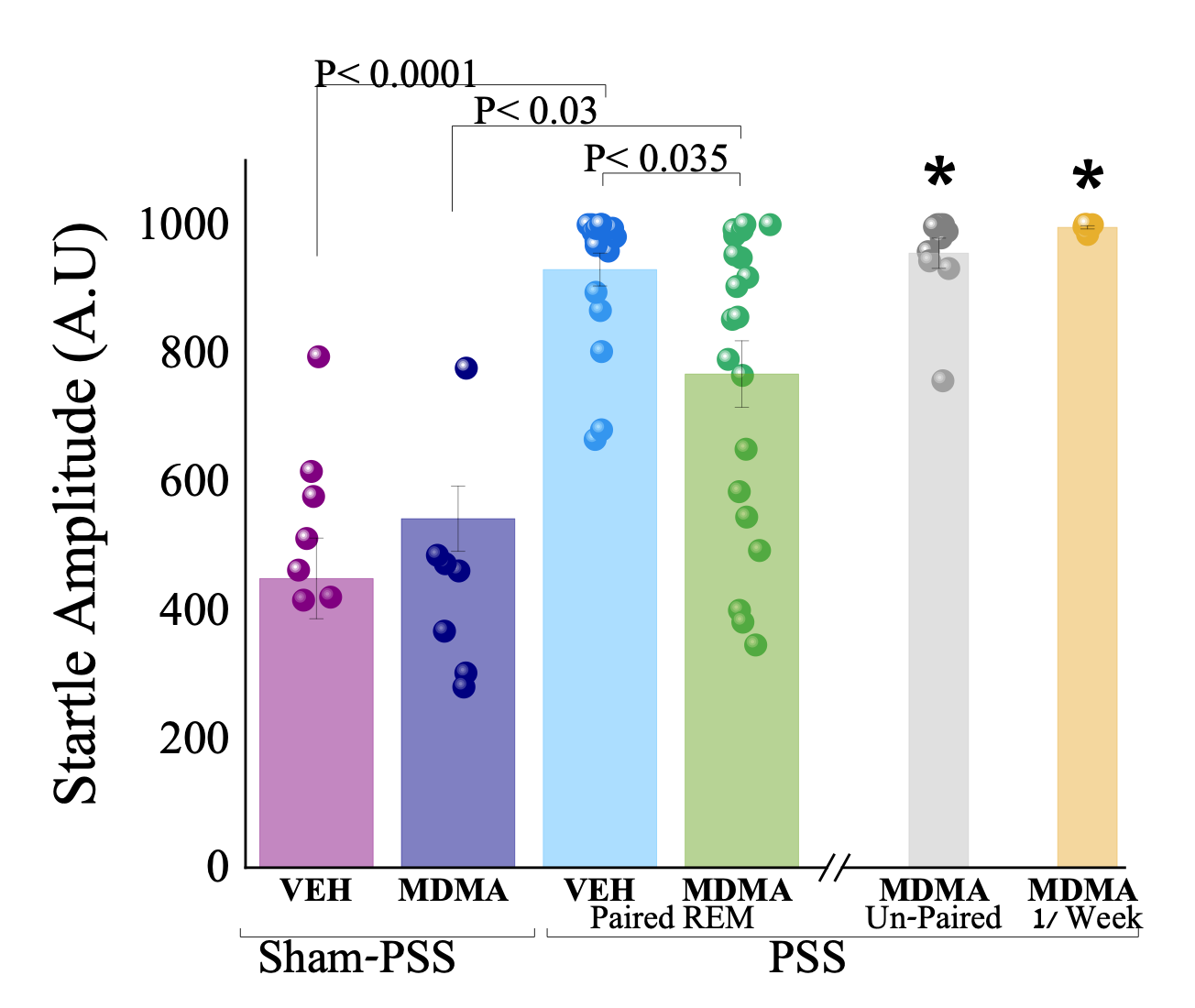
Predator stress produced the exaggerated startle response typical of PTSD. Paired MDMA
reduced it (768 ± 52 vs 930 ± 25, p = 0.035), and here dosing
frequency did matter: three doses a week beat one (p = 0.045), and
reminder-paired dosing beat unpaired (p = 0.045).
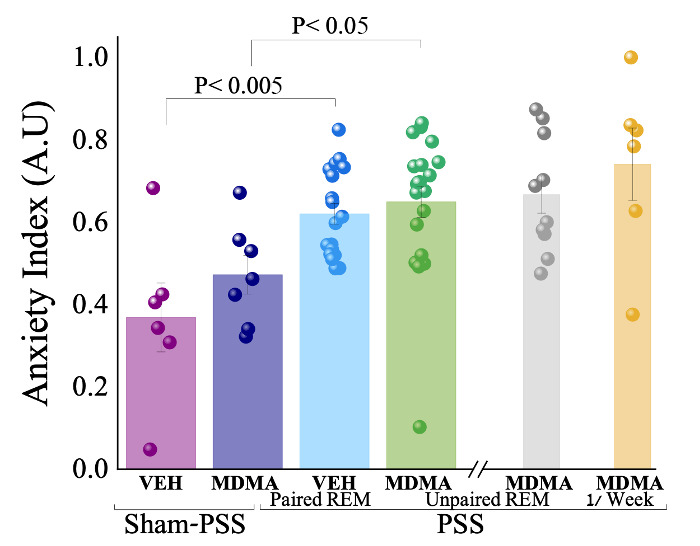
On the elevated plus maze, though, every stressed group stayed equally anxious regardless of
treatment (F(1,48) = 1.92, p = 0.172). That null result is worth as
much as the positive ones: the drug was not producing a blanket emotional flattening. It was
acting on the trauma-linked memory and its arousal signature, and leaving normal
threat responses alone.
Acoustic startle amplitude ↓ — hyperarousal was attenuated, most strongly under frequent, reminder-linked dosing.
Elevated plus maze anxiety index — unchanged. All stressed groups remained elevated over sham controls whether or not they received MDMA.
Mechanism
A neuroplastic signature, not a hormonal one
If micro-dosed MDMA is opening a window for fear memories to be rewritten, something in the
tissue should reflect it. We quantified BDNF, TPH2, oxytocin and glucocorticoid receptor
immunoreactivity across four regions, plus dendritic morphology in the dentate gyrus — all
scored blind to treatment.
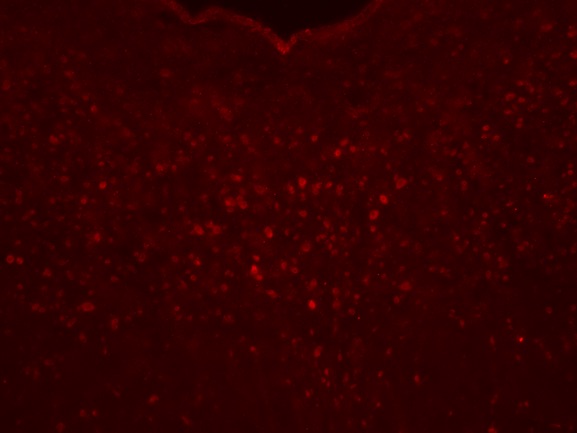
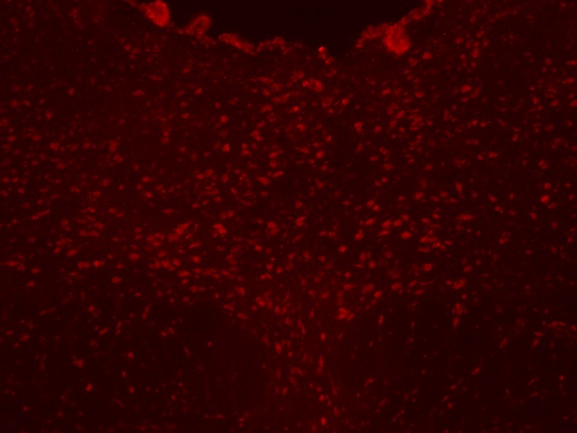
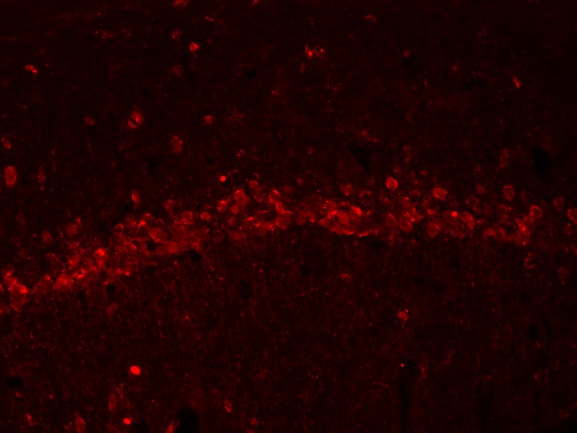
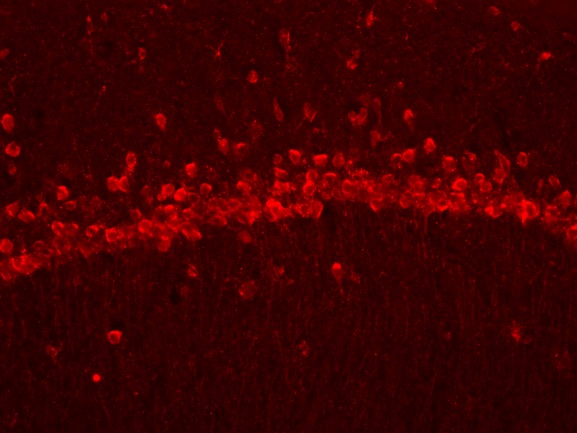
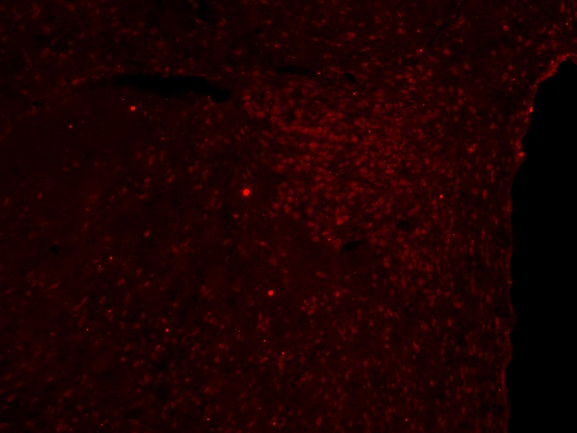
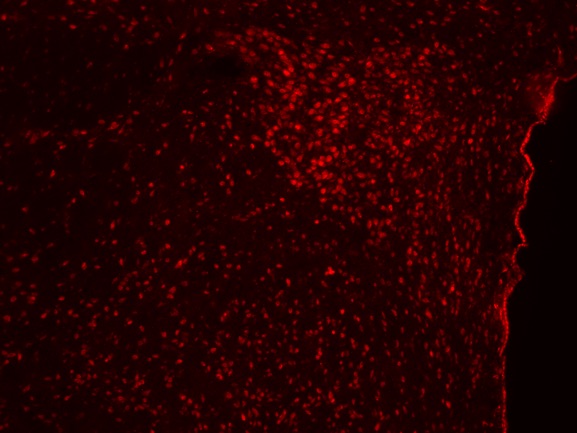
BDNF was up wherever it mattered. The increase held in the dorsal raphe — the source of
most of the brain's serotonergic projections — in hippocampal CA1, which carries contextual
memory, and in the paraventricular nucleus, the hub of the stress axis. CA3, which is less
implicated in contextual fear extinction, did not move.
Bars show group means with SEM whiskers; each dot is one animal
(n = 4 per group), recomputed here from the per-section counts in the
repository. p-values are the one-way ANOVAs reported in the manuscript.
PSS + vehicle
PSS + MDMA
Dorsal raphe
Hippocampus CA1
Paraventricular n.
Representative BDNF immunofluorescence (red), matched exposure settings, 20× magnification.
Quantification by a blinded observer in ImageJ.
What did not change is equally informative
Oxytocin, PVNUnchanged — so the effect is not running through MDMA's signature prosocial pathwayp = 0.730
Glucocorticoid receptor, PVNUnchanged — HPA-axis feedback sensitivity was not alteredp = 0.627
Dendritic length, dentate gyrusNo structural remodelling within three weeks (Golgi-Cox)p = 0.263
TPH2⁺ neurons, dorsal rapheTrended 51% higher, but under-powered at n = 4p = 0.095
At a micro-dose given chronically, the fear- and startle-reducing effects were not accompanied
by detectable oxytocinergic or glucocorticoid changes. What moved instead was neurotrophic
support in serotonergic and stress-regulating circuits — consistent with MDMA creating a
window in which a reactivated fear memory can be updated, rather than suppressing fear directly.
Takeaway
Timing is the therapeutic variable
Continuous post-trauma micro-dosing of MDMA reduced conditioned fear and hyperarousal in a
validated rodent PTSD model, with effects persisting after the drug was withdrawn — and it
did so without the psychoactive doses that current protocols require. The benefit was
strictly conditional on giving the drug while the traumatic memory was active. Tripling the
dosing frequency added nothing; moving the dose away from the reminder removed everything.
For translation, that reframes the design question. It suggests the useful lever may not be
how much MDMA a patient receives, but how precisely dosing is aligned to exposure-based
therapeutic work — a considerably lower-risk proposition than full-dose sessions.
Limitations
Single dose level and a single dosing schedule; male rats only, so sex differences in stress
response are unaddressed; follow-up extended one week past treatment, leaving durability and
tolerance open; and no molecular neurotoxicity assays were run, which matters for any
repeated-dosing claim. The behavioural battery was weighted toward fear and startle, so
social and depressive-like domains remain untested.